1. ISO 9001:2015 + Amd 1:2024 QUALITY MANAGEMENT SYSTEM AWARENESS
ISO 9001:2015 + Amd 1:2024 QUALITY MANAGEMENT SYSTEM AWARENESS
OFFICE OF THE DIRECTOR FOR QUALITY ASSURANCE

What is ISO?
The International Organization for Standardization is an international standard-setting body composed of representatives from various national standards organizations.
-
1946: Delegates from 25 countries met at the Institute of Civil Engineers in London to discuss international standardization.
-
Founded: ISO officially came into existence on 23 February 1947.
-
Current Membership: ISO now has 173 member countries:
-
Australia: Standards Australia
-
Philippines: Bureau of Philippine Standards
-
United States: American National Standards Institute
-
Standards Published: ISO has published 25,802 International Standards, including ISO 9001, ISO 14001, and ISO 45001.
-
Technical Committees: There are 823 technical committees andsubcommittees working on standards development.
-
Headquarters: Geneva, Switzerland.
-
Employees: Approximately 135 staff members at its Central Secretariat.
Accreditation and Certification
-
World association of Conformity Assessment Accreditation Bodies
-
The primary function is to develop a single
worldwide program of conformity assessment
-
iafcertsearch.org

What is ISO?
ISO 9001 is the international standard for a quality management system (“QMS”).
The standard is used by organizations to demonstrate their ability to consistently provide products and services that meet customer and regulatory requirements and to demonstrate continuous improvement.

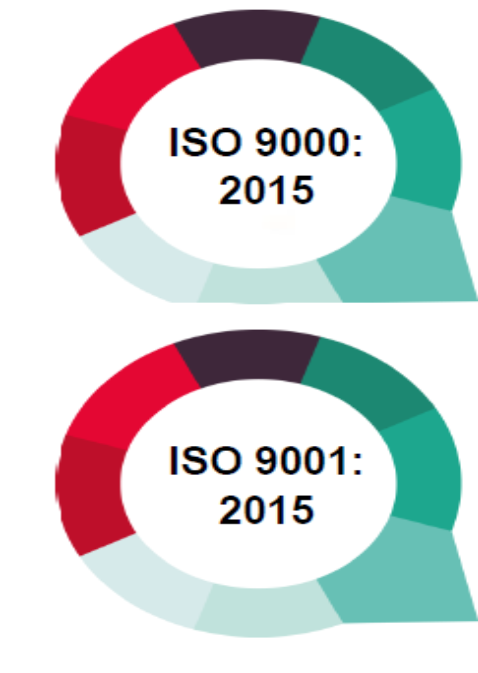
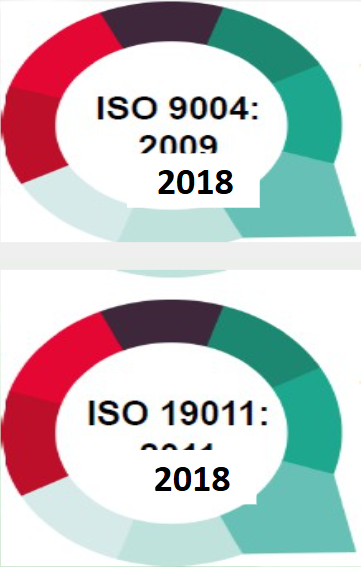
The Family of ISO 9000
-
Quality Management System
Fundamentals and Vocabulary
-
Quality Management System Requirements
-
Quality management – Quality of an organization – Guidance to achieve sustained success
-
Guidelines for auditing management system
What is Amd 1:2024?
-
Amendment 1: Climate Action Changes
-
Inclusion of “climate change” as an external issue/consideration that organizations must determine whether it is relevant, and if so, address it within their Quality Management System (QMS)
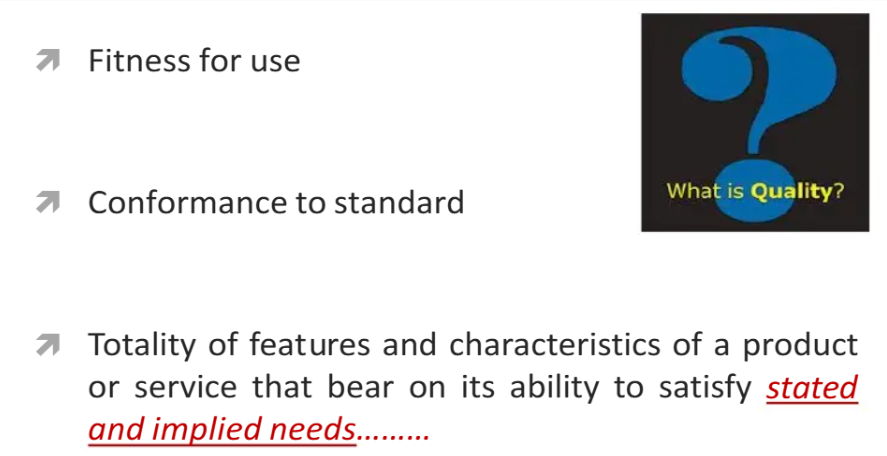
What is QUALITY?
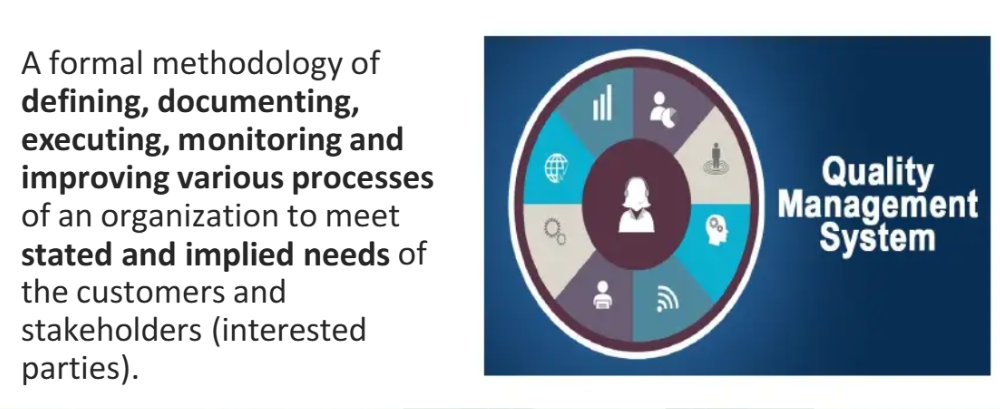
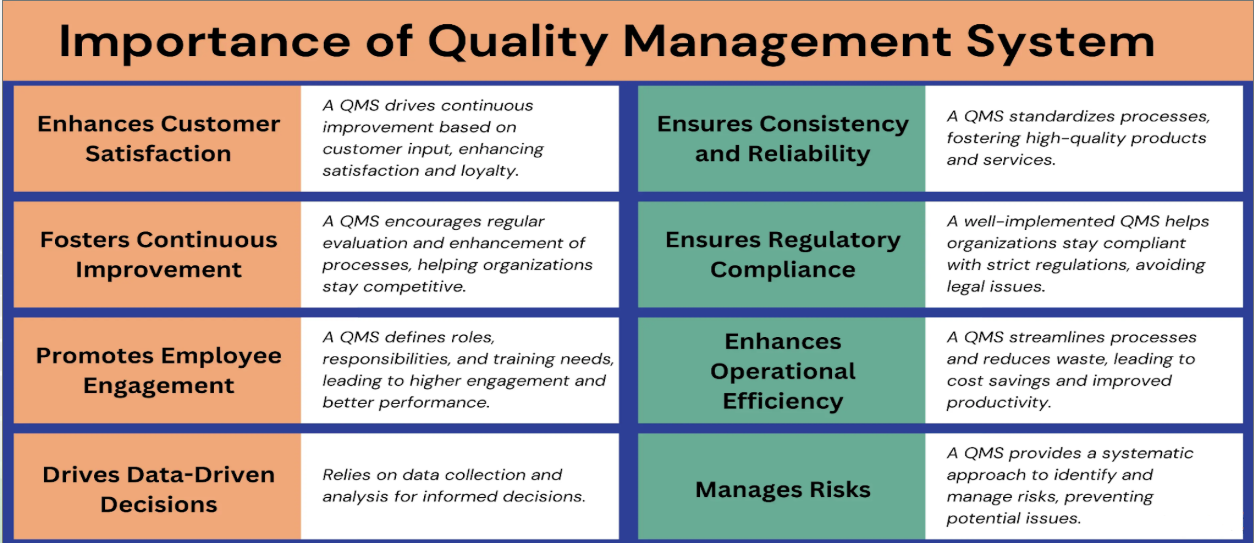
What is QUALITY MANAGEMENT SYSTEM?
The Seven Principles of Quality Management
The 7 Quality Management Principles of ISO 9001:2015 can be tailored for Davao Del Norte State College (DNSC) to strengthen its Quality Management System (QMS):
-
Customer Focus Enhance student services by streamlining enrollment, academic advising, and scholarship application processes.
-
Leadership Ensure top management actively promotes academic excellence, research, and institutional governance.
-
Engagement of People Train faculty and staff in quality management practices to improve education delivery.
-
Process Approach Standardize administrative procedures for admissions, grading, and accreditation compliance.
-
Improvement Continuously refine curriculum and teaching methodologies based on feedback and performance assessments.
-
Evidence-Based Decision Making Use data analytics to assess student performance, retention rates, and institutional effectiveness.
-
Relationship Management Strengthen partnerships with local industries, government agencies, and academic institutions for internships, research collaborations, and community development initiatives.
PDCA Cycle
-
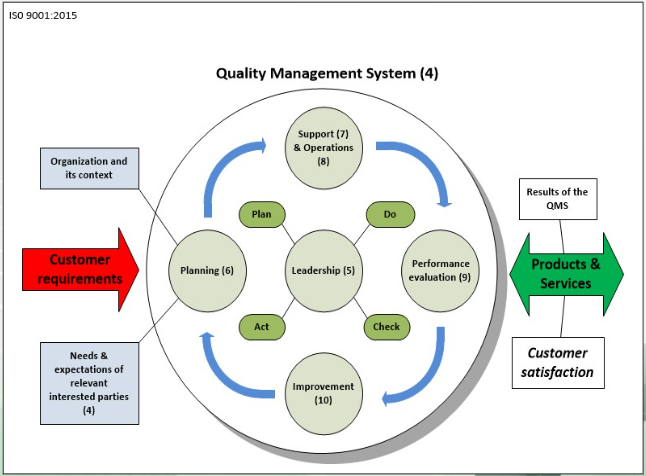
Plan-Do-Check-Act (PDCA) cycle
-
The PDCA cycle can be applied to all processes and to the quality management system as a whole.
The Structure of ISO 9001:2015
-
Scope
-
Normative Reference
-
Terms and Definitions
-
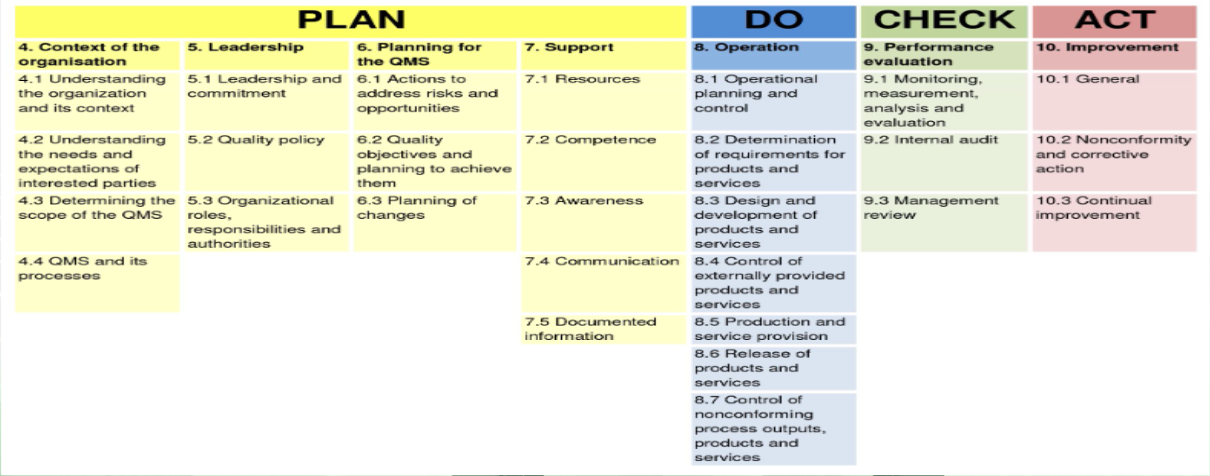
Context of the Organization
-
Leadership
-
Planning
-
Support
-
Operation
-
Performance Evaluation
-
Improvement
ISO 9001 Clause Structure (4-10)
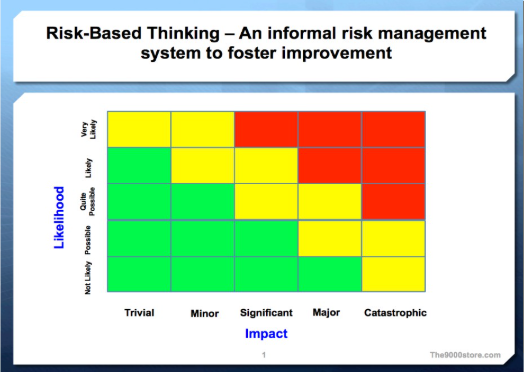
RISK-BASED THINKING
-
Risk-based thinking is essential for achieving an effective quality management system.
-
The concept of risk-based thinking has been implicit in previous editions of this International Standard including, for example, carrying out preventive action to eliminate potential nonconformities, analyzing any nonconformities that do occur and taking action to prevent recurrence that is appropriate for the effects of the nonconformity.