DNSC Strategic Performance Management System
| Site: | Knowledge Network and Organizational Wisdom Stream |
| Course: | HRMO Policies |
| Book: | DNSC Strategic Performance Management System |
| Printed by: | Guest user |
| Date: | Monday, 28 September 2026, 12:58 PM |
1. DNSC Strategic Performance Management System
DNSC-SPMS
DNSC Strategic Performance Management System
DNSC-SPMS
-
A performance-based incentive scheme which integrates personnel and organizational performance shall be established to reward exemplary civil service servants and well performing institutions
-
Personnel performance shall be linked with organizational performance
The SPMS Concept
Strategic Performance Management System
It is a mechanism that ensures that the employee achieves the objectives set by the organization and the organization, on the other hand, achieves the objectives that it has set itself in its strategic plan.

INTRODUCTION

KEY PLAYERS AND RESPONSIBILITIES

SPMS CHAMPION (Agency Head)
JOY M. SORROSA, Ph.D.
College President
-
Primarily responsible and accountable for the establishment and implementation of SPMS.
-
Sets agency performance goals/objectives and performance measures.
-
Determines agency target setting period.
-
Approves office performance commitment rating.
-
Assesses performance of Offices.
The College
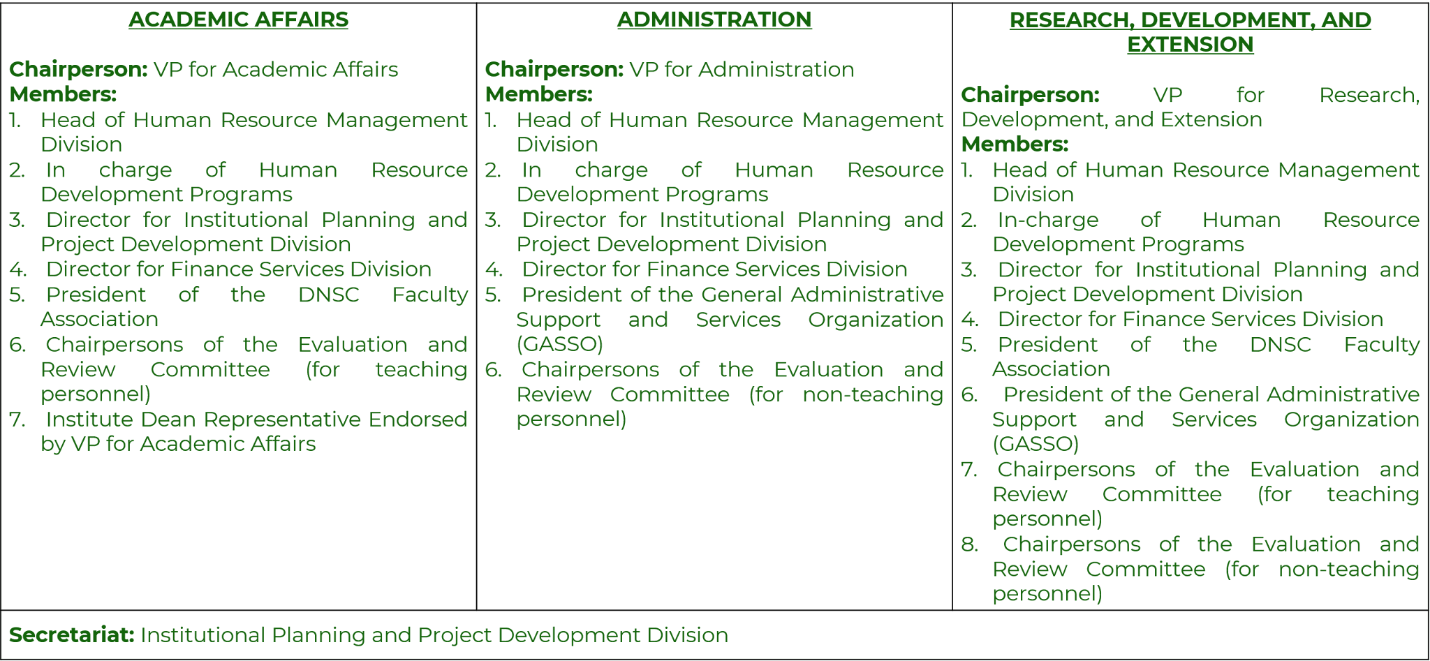
PERFORMANCE MANAGEMENT TEAM
-
Set consultation meetings of all Heads of Offices for the purpose of discussing the targets set in the Office Performance Commitment and Rating Form.
-
Ensure that Office performance targets and measures, as well as the budget, are aligned with those of the agency and that work distribution of Offices/Units is rationalized.
-
Recommends approval of the office performance commitment and rating to the Head of Agency.
-
Acts as appeals body and final arbiter for performance management issues of the Agency.
The College
PERFORMANCE MANAGEMENT TEAM
-
Identifies potential top performers and provides input to the PRAISE Committee for grant of awards and incentives.
-
Adopts its own internal rules, procedures, and strategies in carrying out the above responsibilities including scheduled meetings and deliberations, and delegation of authority to representatives in case of absence of its members.
The Institutional Planning and Project Development Division shall serve as the PMT Secretariat.
The College
PERFORMANCE MANAGEMENT TEAM
INSTITUTIONAL PLANNING AND PROJECT DEVELOPMENT DIVISION
-
Monitors submission of Office Performance Commitment and Review Form and schedules the review/evaluation of Office Commitments by the PMT before the start of a performance period.
-
Consolidates reviews, validates and evaluates the initial performance assessment of the Heads of Offices based on reported office accomplishments against the success indicators, and the allotted budget against the actual expenses. The result of the assessment shall be the basis of the PMT’s recommendation to the Head of Agency who shall determine the final Office Rating.
-
Conducts an agency performance planning and review conference annually for the purpose of discussing the office assessment for the preceding performance period and plans for the succeeding rating period with concerned Heads of Offices. This shall include the participation of the Financial Office as regards budget utilization.
-
Provide each Office with the final Office Attachment to serve as a basis for offices in the assessment of individual staff members.
HUMAN RESOURCE MANAGEMENT DIVISION
-
Monitor’s submission of the Individual Performance Commitment and Review Form by heads of offices.
-
Review the Summary List of Individual Performance Ratings to ensure that the average performance rating of employees is equivalent to or not higher than the Office Performance Rating as recommended by the PMT and approved by the Head of Agency.
-
Provides analytical data on retention, skill/competency gaps, and talent development plans that align with strategic plans.
-
Coordinates development interventions that will form part of the HR plan.
HEAD OF OFFICE
-
Assumes primary responsibility for performance management in their office.
-
Conduct strategic planning sessions with the supervisors and staff and agree on the outputs that should be accomplished based on the goals/objectives of the organization and submit the Office Performance Commitment and Review Form to the Planning Office.
-
Review and approve Individual employees’ Performance Commitment and Review Form for submission to the HRM Office before the start of the performance period.
-
Submits a quarterly accomplishment report to the Planning Office based on the PMS Calendar (Annex D).
-
Does initial assessment of the office’s performance using the approved Office Performance Commitment and Review Form.
-
Determine the final assessment of the performance level of the individual employees in their office based on proof of performance.
-
Informs employees of the final rating and identifies necessary interventions for employees based on the assessment of their developmental needs.
-
Recommends and discusses developmental plans with the subordinates who obtain unsatisfactory performance during the rating period not later than one (1) month after the end of the said period and prepares written notice/advice to subordinates that a succeeding unsatisfactory performance shall warrant their separation for the service.
-
Provides preliminary rating to subordinates showing poor performance not earlier than the third (3rd) month of the rating period. A development plan shall be discussed with the concerned subordinates and issue a written notice that failure to improve their performance shall warrant their separation from the service.
IMMEDIATE SUPERVISOR
-
Assumes joint responsibility with the Heads of Delivery Units in ensuring the attainment of performance objectives and targets.
-
Rationalize the distribution of targets/tasks.
-
Monitors closely the status of the performance of their subordinates and provides support and assistance through the conduct of coaching for the attainment of targets set by the division/unit and individual employees.
-
Assess individual employee’s performance.
-
Recommends development intervention.
INDIVIDUAL EMPLOYEES
-
Act as partners of management and their co-employees in meeting organizational performance goals.
SPMS PROCESS
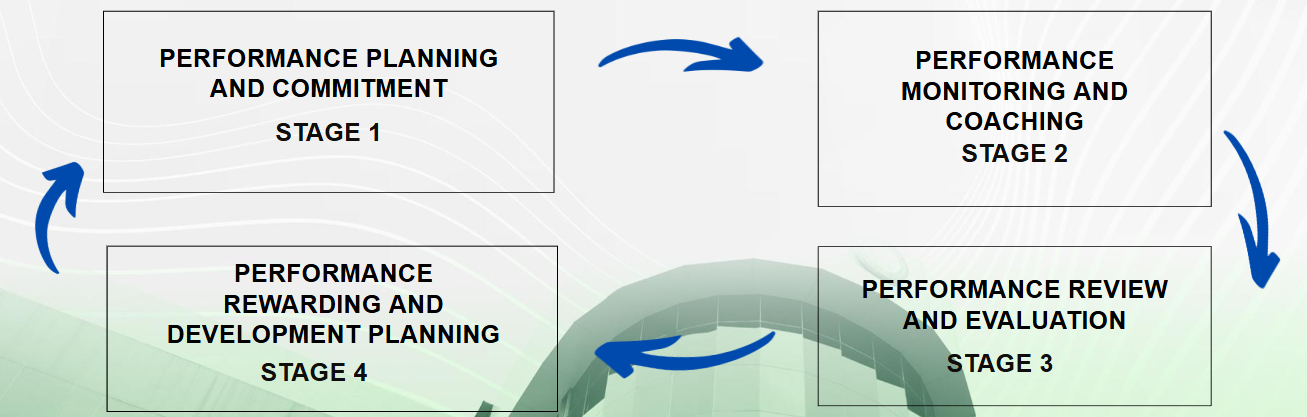
The SPMS Process
PERFORMANCE PLANNING AND COMMITMENT
STAGE 1
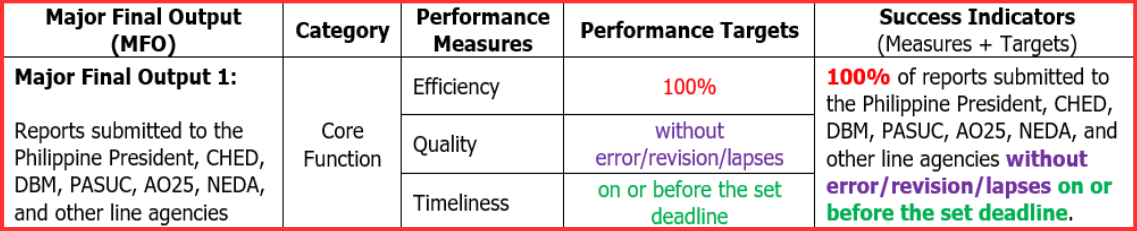
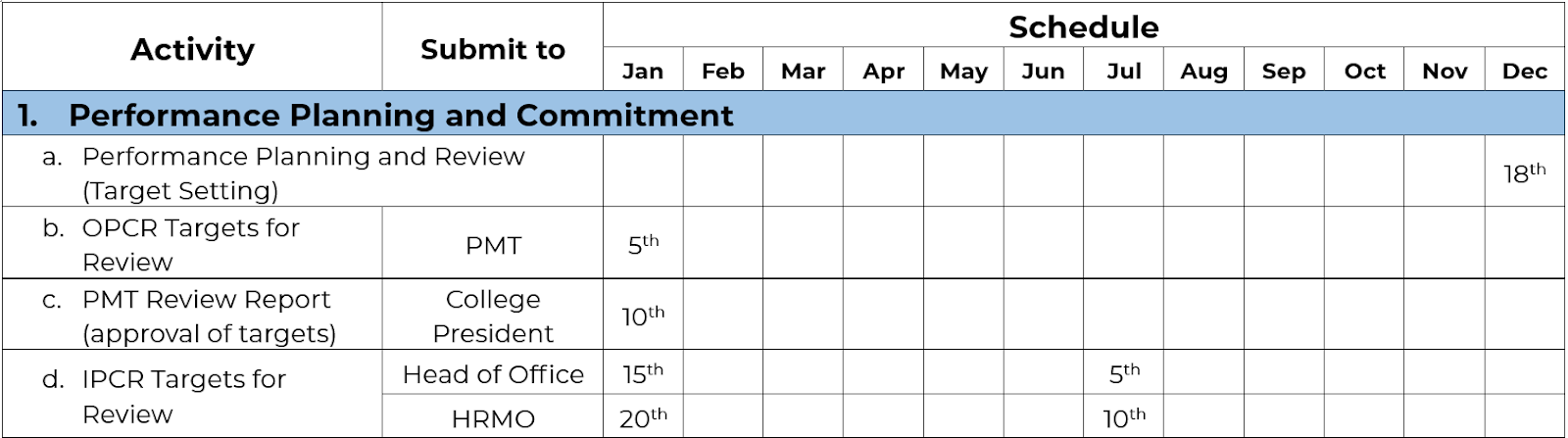
This is done at the start of the performance period where Heads of Offices meet the supervisors and staff and agree on the outputs that should be accomplished based on the goals/objectives of the organization.
-
Heads of Offices - submits Office Performance Commitment Review (OPCR) TARGETS
-
Individual Employees - submits Individual Performance Commitment Review (IPCR) TARGETS
SPMS CALENDAR
PERFORMANCE MONITORING AND COACHING
STAGE 2
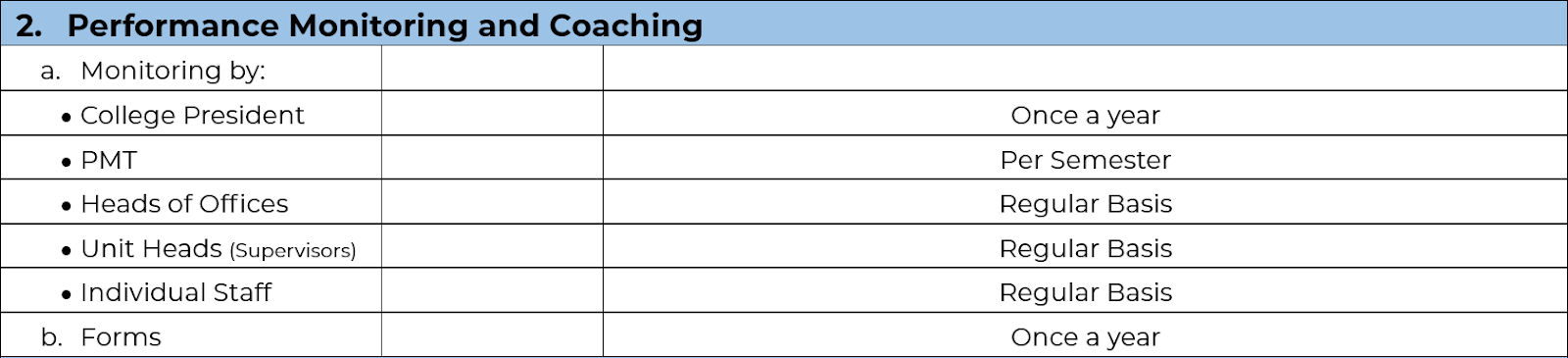
During the performance monitoring and coaching phase, the performance of the offices and every individual shall be regularly monitored at various levels.
Supervisors and coaches play a critical role at this stage. Their focus is on the critical function of managers and supervisors as coaches and mentors in order to provide an enabling environment/intervention to improve team performance; and manage and develop individual potential.
SPMS CALENDAR
PERFORMANCE REVIEW AND EVALUATION
STAGE 3
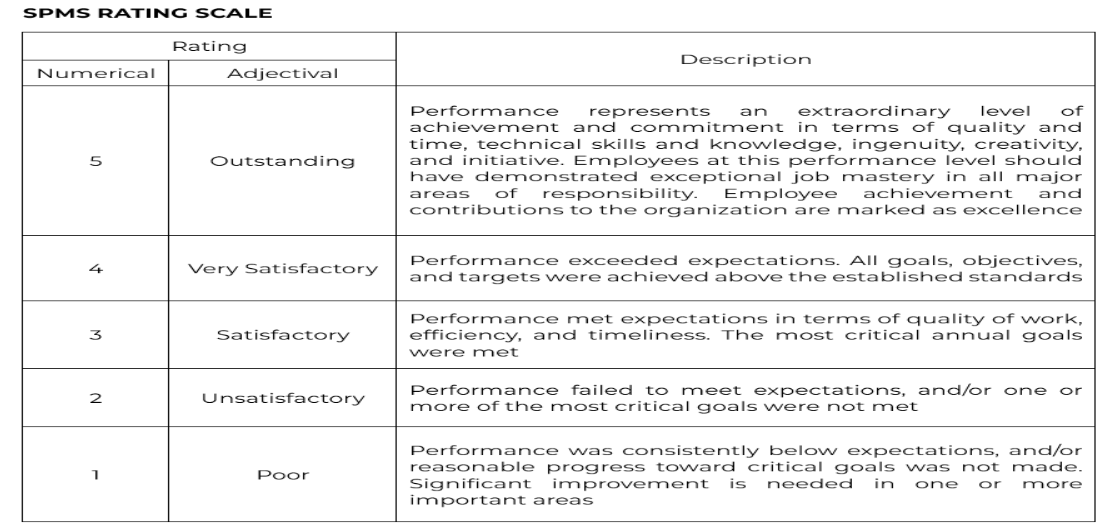
This phase aims to assess both office and individual employees’ performance levels based on performance targets and measures as approved in the office and individual performance commitment contracts.
-
Heads of Offices - submits Office Performance Commitment Review (OPCR) ACCOMPLISHMENTS with attached proof of evidence
-
Individual Employees - submits Individual Performance Commitment Review (IPCR) ACCOMPLISHMENTS with attached proof of evidence
-
Office Performance Assessment
The Planning Office or any responsible unit in the agency shall consolidate, review, validate, and evaluate the initial performance assessment of the Heads of Offices based on reported office accomplishments against the success indicators, and the allotted budget against the actual expenses.
-
Performance Assessment for Individual Employees
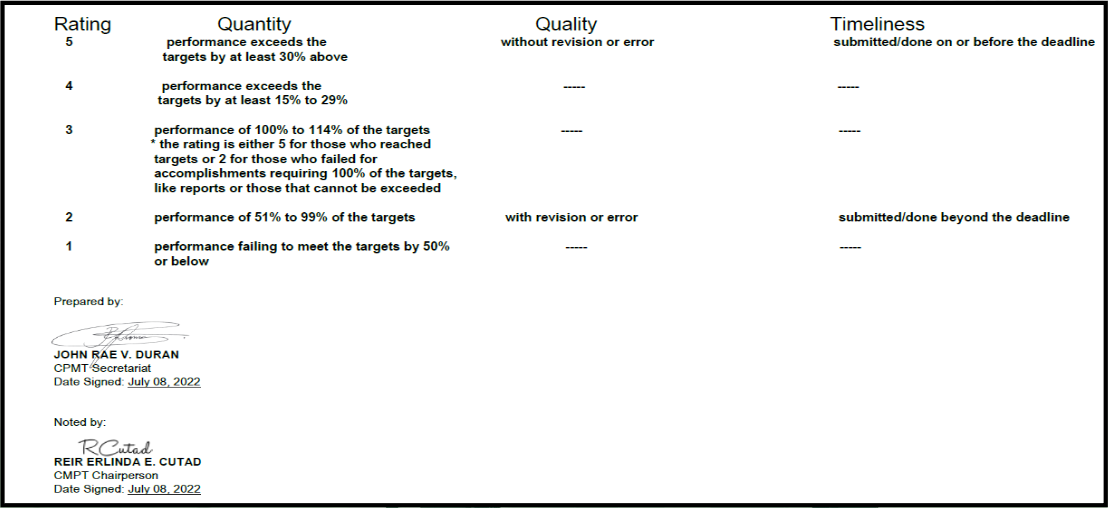
The head of office/immediate supervisor shall assess individual employee performance based on the commitments made at the beginning of the rating period. The performance rating shall be based solely on records of accomplishments.
The supervisor shall indicate qualitative comments, observations, and recommendations in the individual employee’s performance commitment and review.
Employee’s assessment shall be discussed by the head of office/supervisor with the concerned ratee prior to the submission of the Individual Performance Commitment and Review Form to the Head of Office and HRMO.
***The average of all individual performance assessments shall not go higher than the collective performance assessment of the Office.
Rating Period: Non-Teaching - semi-annual (January - June ; July - December)
Rating Period: Teaching – annual (January – December)
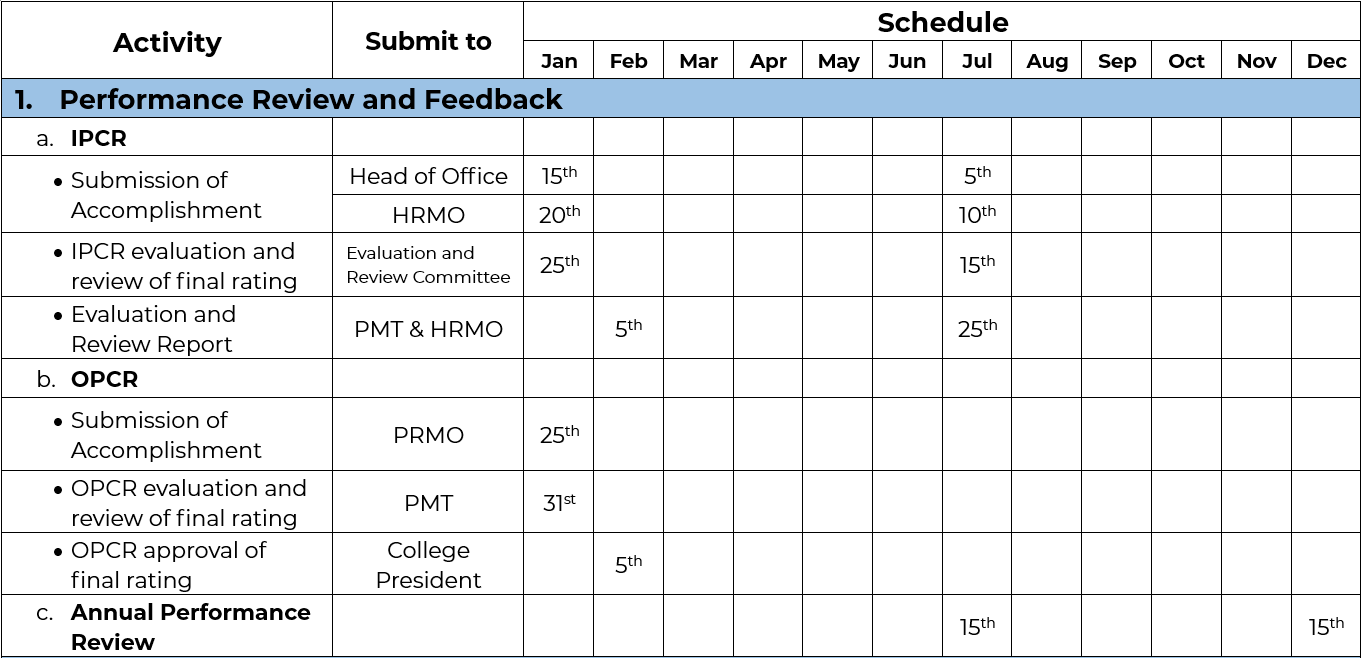
SPMS CALENDAR
PERFORMANCE REWARDING AND DEVELOPMENT PLANNING
STAGE 4
The result of OPCR and IPCR shall serve as the basis for performance rewarding and development planning.
The result of the assessment shall be discussed by the Head of Office and supervisors with the individual employee at the end of each rating period. The discussion shall focus on the strengths, competency-related performance gaps, and the opportunities to address these gaps, career paths, and alternatives.
The result of the performance evaluation/assessment shall serve as input for the:
-
Heads of Office in identifying and providing the kinds of interventions needed, based on the developmental needs identified;
-
DNSC Human Resource Management Office in consolidating and coordinating developmental interventions that will form part of the HR plan and the basis for rewards and incentives;
-
DNSC PMT in identifying potential PRAISE Awards nominees for various awards categories; and
-
PRAISE Committee in determining top performers of DNSC who qualify for awards and incentives.
Uses of Performance Ratings
-
Security of tenure of those holding permanent appointments is not absolute but is based on performance.
Employees who obtained an unsatisfactory rating for one rating period or exhibited poor performance shall be provided appropriate developmental intervention by the Head of Office and Supervisor, in coordination with the HRM Office, to address competency-related performance gaps.
Uses of Performance Ratings
If after advice and provision of developmental intervention, the employee still obtains unsatisfactory ratings in the immediately succeeding period or Poor ratings for the immediately succeeding rating period, he/she may be dropped from the rolls. A written notice/advice from the head of office at least 3 months before the end of the rating period is required.
-
The PMT shall validate the outstanding performance ratings and may recommend concerned employees for performance-based awards. Grant of performance-based incentives shall be based on the final ratings of employees as approved by the Head of Office.
-
Employees with Outstanding and Very Satisfactory performance ratings shall be considered for promotion, training and scholarship grants, and other personnel actions.
-
Officials and employees who shall be on official travel, approved leave of absence, or training or scholarship programs and who have already met the required minimum rating period of 90 days shall submit the performance commitment and rating report before they leave the office.
-
Employees who are in detail or secondment to another office shall be rated in their present or actual office, copy furnished their mother office.
-
No faculty member shall be considered for promotion without a record of at least one very satisfactory rating from the previous year of performance assessment.
DNSC-SPMS
Sanctions
Unless justified and accepted by the PMT, non-submission of the OPCR Form to the PMT and the IPCR to the HRM within the specified dates shall be a ground for:
-
Employees disqualification for performance-based personnel actions which would require the rating for the given period such as promotion, training or scholarship grants, and performance enhancement bonus, if the failure of the submission of the report form is the fault of the employees; and
-
An administrative sanction for violation of reasonable office rules and regulations and simple neglect of duty for the supervisors or employees responsible for the delay or non-submission of the office and individual performance commitment and review report.
-
Failure on the part of the Head of Office to comply with the required notices to their subordinates for their unsatisfactory or poor performance during a rating period shall be a ground for an administrative offense for neglect of duty.
Appeals
-
Individual employees who feel aggrieved or dissatisfied with their final performance ratings can appeal to the PMT within ten (10) days from the date of receipt of notice of their final performance evaluation rating from the Head of Office. An office/unit or individual employee, however, shall not be allowed to protest the performance ratings of other office/units or co-employees. Ratings obtained by other offices/units or employees can only be used as a basis or reference for comparison in appealing one's office or individual performance rating.
-
The PMT shall decide on the appeals within one month from receipt. Appeals lodged at the PMT may be appealed to the Office of the College President.
-
Officials or employees who are separated from the service on the basis of Unsatisfactory or Poor performance ratings can appeal their separation to the CSC or its regional office within 15 days from receipt of the order or notice of separation.
THANK YOU!